Street Eels
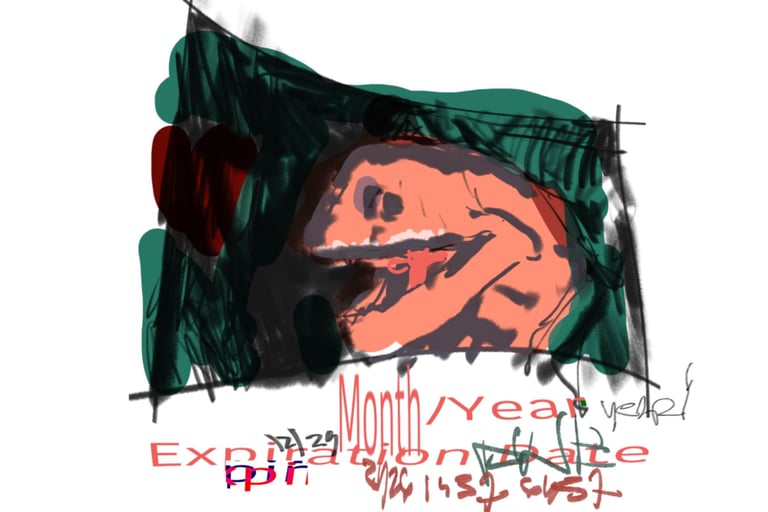
Perspex Foamed Reflective vinyls Dinosaur skin model, mocking, talking about maybe a dinosaur you knew.
DOCUMENT OVERTHROW
Sean Killen
12/1/20235 min read
The Electric Eels of Third Avenue
On the afternoon the eels awoke, the credit card lay forgotten on the kitchen counter, half-buried beneath a grocery receipt and a postcard of a trope about butter no one sent anymore. Outside, the sun slid across Third Avenue the way it always had—bright, shallow, reflective—glinting off storefronts that sold things people once touched and now merely tapped.
The eels had been there for years.
They were decorative, at first. Art. Installations. A municipal experiment in modern beautification. Long, sinuous sculptures made of foamed Perspex and reflective vinyl, mounted in the shallow canals that threaded through the neighborhood like lazy veins. They gleamed silver-blue in the daylight and drank the neon at night, bending it into wavering rainbows.
Children leaned over railings to watch them shimmer. Old men said they looked like fish made by accountants. The city brochure said they were symbols of flow, connectivity, abundance and the future.
No one suspected they were listening.
They began to move at 3:17 p.m., just as the streetlights flickered on early—confused by clouds thick with static. It wasn’t dramatic. Not a splash or a lunge. Just a slow, deliberate twitch, like a thought forming inside a machine.
The first eel lifted its head.
Its vinyl skin caught the sky and reflected it back wrong—too sharp, too knowing. The others followed, their bodies whispering against the canal walls, making a sound like fingertips brushing a credit card reader of a separate state and the prohibition of alcoholic beverages.
Inside the house, I felt it as a mild pressure behind the eyes. A faint hum, like a refrigerator dreaming.
The radio murmured nonsense about getting jacked on a testosterone drink called “Thai Dickless.”
The phone warmed in my pocket and started showing pictures of black shirts.
The card on the counter vibrated once, politely.
I ignored it.
the future doesn’t announce itself with trumpets. It slips in wearing your old clothes. That afternoon, it wore my name; prohibiting intermarriage and mixing of race.
⸻
The eels learned quickly. Status of glory.
They discovered frequencies the way children discover lies—by accident, then with intent. They found the pulse of Wi-Fi leaking from walls, the buried arteries of fiber-optic cable, the electric residue left behind by passwords typed too often and remembered too poorly.
They did not steal information at first. Just bias.
They synchronized. 1993 Palestinians and unsettled refugees from Vietnam.
Each eel aligned itself with a household, a person, a rhythm of spending and forgetting. They swayed gently in time with bank notifications and purchase confirmations, with the soft panic that followed fraud alerts sent too late.
At night, their reflective skins glowed faintly, pulsing like dreams behind eyelids. If you watched long enough, you could see shapes inside them—numbers drifting like plankton, expiration dates swimming in schools, names refracted into unreadable light.
The city council blamed vandalism.
The utility company blamed solar flares.
The newspapers blamed no one at all.
They printed headlines that slid off the mind with formalistic fairness, revised fairy tales with polyglot hero’s. Pictures of cats licking their assholes and eating butter.
Logo’s. Books.
⸻
I realized what was happening when the eel outside my window lifted its head and looked at me.
Not with eyes—there were none—but with a mirror-bright curve that returned my face fragmented and multiplied. I saw myself older, thinner, flickering like a low-resolution memory.
The eel vibrated.
My phone chimed with teachings day to day; speaking an ethnic Indo-European language group that was only allowed to address bartering and sports. The wise women and wise men account for the concerns of the financial; the church doesn’t want your money. Ancestry. Cash is no longer king.
A purchase confirmed itself.
Something expensive, something unnecessary, something already gone.
I rushed to the counter, heart knocking like a trapped moth. The card was warm now, humming faintly, its numbers slightly blurred, as if they had been breathed on by something patient and cold.
Outside, the eel dipped back into the canal, satisfied.
That night I dreamed of checkout lines that never ended, of receipts unspooling like scrolls of confession. I dreamed of eels sliding through wires, through veins, through the thin gap between wanting and owning.
I woke to find my card replaced neatly where it had been.
Polite thieves.
Beautiful thieves.
Hungry as light recipes.
⸻
The neighborhood began to change. A god damned tournament table of bullshit.
People stopped trusting the dark. They taped over laptop cameras. They whispered PIN numbers like prayers. The canals filled with watchers—men and women staring down at the eels as if waiting for them to sing.
The eels only shimmered.
A boy threw a magnet. It stuck for a moment, then slid off, useless.
A woman poured bleach into the water. The eels reflected her face back at her, clean and unafraid.
Someone tried to smash one with a hammer. The vinyl flexed, absorbed the blow, and returned it as a sound—a perfect digital ding.
Transaction complete.
⸻
I went down to the canal at dawn, when the city was quiet enough to hear its own circuits thinking. The eel nearest me rose again, taller this time, its body unfolding like a receipt printed in light.
I spoke to it.
“I don’t have much,” I said, feeling foolish and old. “Just numbers. Memories. A habit of buying the wrong fucking things.”
The eel shimmered brighter.
In its surface I saw my past purchases: books unread, gifts ungiven, late-night orders made to fill a silence. The eel wasn’t stealing money.
It was collecting patterns of language power issues.
Electronic synchronicity, they called it later—the alignment of desire and data, the moment when machines learned not just what we bought, but why.
The eel leaned closer.
I felt a tug, gentle as plastic nostalgia.
“No,” I said, and for the first time in years, I meant it.
The card in my pocket went still.
The eel recoiled slightly, confused. Around us, others faltered, their rhythms disrupted by refusal, by attention, by people finally remembering they were more than numbers printed on plastic. At this time human services and professional America hung on the walls of sanctuary. Communities in civilizations lingua Franca with members of the tribe, history and invariably something worse; a fascination in the terrible deaths and punishments dolled out for lives on screen.
The lights flickered.
The hum dimmed.
The canals grew quiet.
⸻
By morning, the eels were sculptures again.
The city drained the canals, hauled them away, sold them to a museum that specialized in failed futures. New installations arrived—something safer, something inert.
People went back to tapping and swiping.
The cards cooled.
The dreams faded between emotion and physical fact.
But sometimes, late at night, when the house is quiet and the phone warms in my hand, I hear a faint shimmer outside—like vinyl brushing water, like numbers dreaming of becoming alive again.
And I remember anxiety. I left the butter out.
The future is always watching.
The future is always hungry.
And it already knows your name.
In happy it doesn’t happen anymore.