Landscape
I’m based in Vernon Hills, Illinois.
Sean Killen
6/25/20234 min read
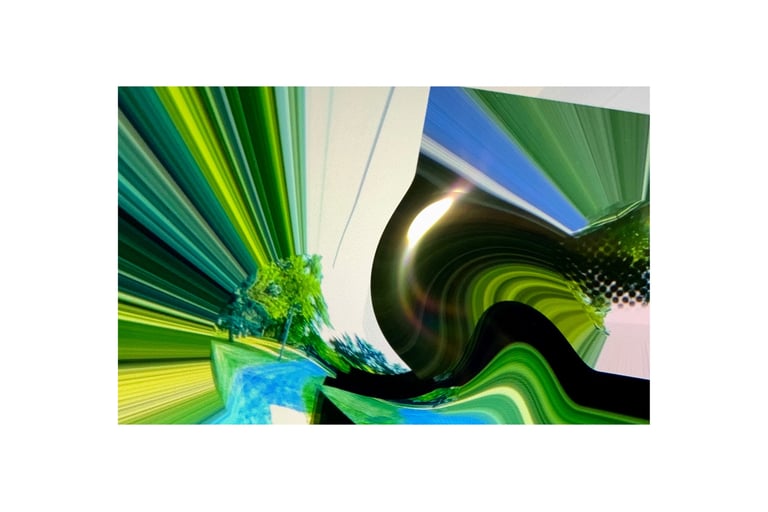
The Sun Is a Dirty Machine
I never trusted machines that pretended to be clean.
This one was filthy with dubious light.
They built it in an open plaza because it refused walls. Sunlight only—raw, uncut, none of that laboratory bullshit. It drank the sun the way people drink gin: their way, with no apologies afterward.
“You sure it’s ready?” I asked.
The engineer—thin, jaundiced, already halfway gone from too many jumps—laughed.
“Ready is a human word,” he said. “The sun doesn’t give a damn if you’re ready.”
That should’ve been my cue to leave.
Instead I stepped closer and felt the day thinning around me, like noon being peeled away layer by layer. You don’t notice how much you rely on the sun until someone starts siphoning it off right in front of you.
The machine didn’t glow. It swallowed about me.
⸻
Short Trips, Long Consequences
They told us it was teleportation. That was a lie told to calm the accountants.
What it really was: an interval. A theft. A moment where you rode the spine of light itself and hoped your guts didn’t slosh out the other end.
Only short distances, they said.
“Across town.”
“Across the water.”
“Across the idea of distance.”
One guy—Paul, I think—asked what happens if you go too far.
The technician shrugged. “Vomiting, is everyday.”
“You arrive before you leave,” he said. “Or after. Or sideways.”
Paul didn’t laugh. He went anyway. Came back three minutes later in a new discursive system, crying because his mother was suddenly alive again and he’d just buried her the week before.
They kept the machine running.
⸻
Inside the Light
The shift itself wasn’t fast. Speed is something you measure from the outside. Inside, it was obscene and still at the same time, like being fucked by eternity.
No tunnel. No stars. None of that romantic crap.
It was spotlights.
Endless, brutal spotlights cutting across one another like drunk search parties. Some froze beside me, white and thick as bone. Others tore past so fast they left spectacle bruises on my thoughts.
And they weren’t synchronized, symbolic transitions.
That’s the part no one warns you about. The lights move at different speeds, different ages. You pass yesterday and tomorrow like bad neighborhoods.
I tried to scream. Actors manque. There was no mouth in ink black.
⸻
Arrival Is a Kind of Birth
I landed on a roof smelling like hot tar and oranges.
I puked immediately.
A woman was already there, smoking, waiting her turn.
“How was it?” she asked.
“Like getting slapped by some dickhead.” “Like-getting hit by something off a car while you’re trying to hitch-hike.” I said.
She nodded. “Yeah. That tracks.”
She told me she jumped twice a day. Courier work. Said the Lightscape—her word—was starting to feel familiar.
“Like streets?” I asked.
“Like moods,” she said. “Some days it’s gentle. Some days it wants something from you, like your signature in a school yearbook. Bioclastic episodes and tragic fucking understatements.”
That should’ve scared me.
It didn’t.
⸻
The Ones Who Remember
Most people forget the shift the way you forget anesthesia.
Some of us don’t.
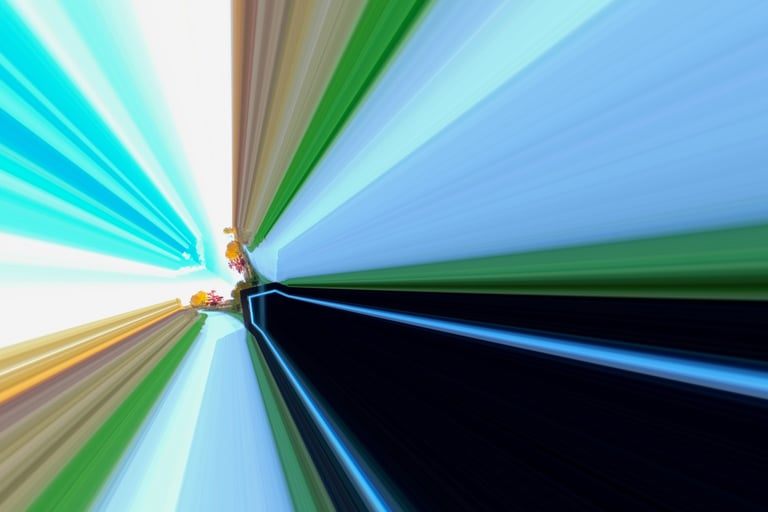
We remember the angles. The way certain beams hesitate, like they’re deciding whether to let you through. The way others feel crowded, thick with old light that’s been somewhere terrible before it reaches you. An aesthetic reconnaissance tour.
I drew it once—woke up with no restraint, all the fresher, scratching lines into a notebook like a madman. Currents. Nodes. Places where the light slowed down enough to think. A square arena forming four triangles, created with diagonal lines.
Another guy saw it too.
“Yeah,” he said, looking at my sketch. “That one moves backward.”
Backward. As if that meant anything anymore elemental.
⸻
Machines Learn Bad Habits
The engineers got greedy. Of course they did.
They started aiming—not at places, but at paths. They tuned the machines to catch specific beams, like hitching rides on passing bullets.
Miss the beam and you’d arrive wrong.
A block over.
An hour earlier.
Once, a woman arrived already mourning herself.
“Time leakage,” they called it, like it was a plumbing issue.
Scalar division, We just called it rot.
⸻
People Start Carrying Light
After a while, some of us didn’t need the machines so much.
You could tell by the voice first. It rang differently. As if words were traveling faster than mouths.
They gathered us once, put us in a room, told us to talk.
We sang instead.
No melody. Just alignment.
The lights flickered. The machine outside powered itself.
One of the engineers whispered, “piece of shit.”
“No,” I said. “Something older.”
⸻
A Man Who Stayed Gone
There was a technician who missed his exit.
Machine said success. Sun moved on. Nothing exploded. Our eye-beams twisted on one double-string of inner experience. Shadows without substance.
Three weeks later he came back during my backwards shift—just fell out of the light like a bad idea.
“Don’t stay,” he said, grabbing my arm. “It notices imbalance.”
“What notices?” I asked.
He smiled. Or tried to.
“Speed.” He said.
Then he broke apart—not blood and guts, just coherence. Like he’d been held together by habit and the habit wore off filled with rolls of assorted materials.
I landed alone.
⸻
The Sun Gets Tired
Cities changed. Some shut the machines down. Others fed them harder paradoxes, built mirrors the size of stadiums, bent the sky until the sun had no choice but to cooperate.
Me? I slowed down.
Walked places again. Took trains. Let distance mean something.
But sometimes—at sunset—I stand where the machines used to be and watch the spotlights sweep the sky from distant towers.
And I swear I see people in there. Divested through some era.
Keeping pace.
Riding about.
Fast as stop.
Too far to come home.