Colors
A modernist’s new age story. Gambling is legal. Astral, everything is legal. Real estate, Public Lands and Trades.
DOCUMENT THOUGHT
Sean Killen
3/25/20245 min read
Sitting Here
⸻
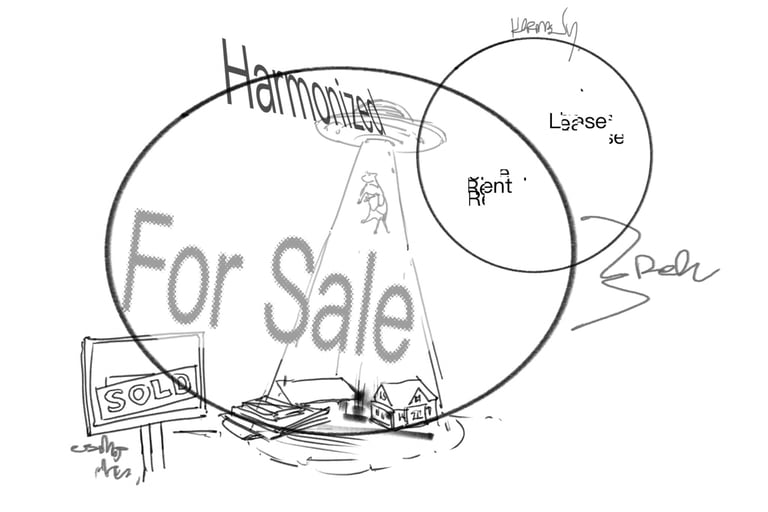
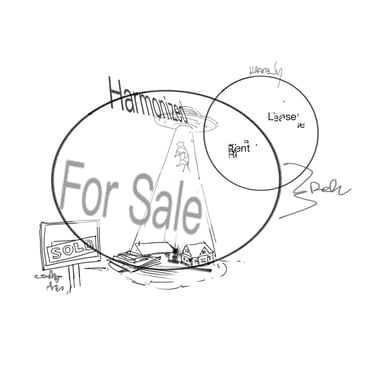
They called it The Harmonizer, we called it all play-guitar, which was the first sign it could not be trusted. It also didn’t have a vice.
It sat in a rented office above a defunct hat store, humming softly like a guilty conscience. The machine itself resembled a church organ that had lost its religion—keys, levers, wires, and a brass dome shaped like a senator’s forehead. When activated, it allowed a small group of people to share thoughts, impressions, impulses, and—most importantly—confidence. Not wisdom. Confidence. There is a difference, and it has ruined more nations than ignorance ever did.
The inventors did not set out to sell real estate. They had loftier dreams, which is how all disasters begin. Their original ambition was to improve communication, a phrase which has never once resulted in improvement but has always resulted in speed. And speed, applied to foolishness, merely delivers the outcome faster.
The group consisted of five individuals, each selected not for virtue or intelligence but for availability.
First there was Edgar Loomis, who had once sold riverboats that could not float and therefore believed deeply in human optimism. Edgar handled the speaking, because he could talk for forty minutes without saying anything and consider it a productive morning.
Second was Myrtle Quince, a former schoolteacher who had learned early that facts were less persuasive than tone. Myrtle operated the Harmonizer’s emotional dials, which regulated excitement, dread, and the powerful but underappreciated sensation of almost understanding.
Third came Caleb Finch, whose genius lay in numbers and whose moral compass had been pawned during the Panic of ’08. Caleb did not lie; he merely rearranged probability until it felt like destiny.
Fourth was Horace Bell, a real estate man by inheritance and a philosopher by accident. Horace believed land was the last honest thing left in America, mostly because it couldn’t run away once you’d sold it to someone.
And finally there was Miss Opal Reed, who had no official title but could smell opportunity the way a bloodhound smells bacon. When Opal smiled, markets shifted.
The Harmonizer worked like this: each member placed a hand on the brass dome and thought together. Not separately, not in sequence, but as a single warm blur of intent. Ideas moved through them like rumors through a small town—faster than reason and impossible to stop once started.
Their first experiment was innocent enough.
Edgar thought of a modest apartment building in Ohio—brick, dependable, dull. Horace added zoning language. Caleb added a mild uptick in regional growth statistics. Myrtle infused it with optimism. Opal added desire.
Within minutes, Caleb noticed something peculiar.
“Gentlemen,” he said, removing his hand, “and Myrtle—someone just bought fifteen thousand shares of Midwest Residential Holdings.”
Edgar blinked. “Why?”
Caleb checked his screen. “No earthly reason, dickhead.”
They tried again.
This time it was a strip mall in Arizona that smelled faintly of regret and nail polish. The Harmonizer hummed. The air grew warm. Somewhere, a trader sneezed and bought stock he had never heard of.
Within an hour, property-linked equities were rising like dough in a dishonest oven.
That was when Horace, who had been quiet, spoke the sentence that history will one day carve into a marble plaque and then immediately regret:
“Well, if thoughts can move stocks, stocks can move land.”
They realized then that they were no longer selling buildings.
They were selling belief.
The strategy developed naturally, which is to say, without reflection.
They would select an undesirable property—a swamp-adjacent subdivision, a luxury condo built directly under a flight path, a retail complex whose anchor tenant was a prophetic bookstore—and feed it into the Harmonizer. Together they would imagine prosperity so vividly that it spilled outward into the stock market, nudging prices just enough to convince analysts that something real was happening.
Analysts, it must be noted, are the priests of finance. They interpret signs, wear serious faces, and are rarely punished for being wrong as long as they sound confident while doing it.
Soon headlines appeared:
“UNEXPECTED INTEREST IN REGIONAL PROPERTY FUNDS”
“QUIET SECTORS SHOW SURPRISING MOMENTUM”
Investors followed. Prices rose. Confidence bloomed.
Then Horace sold the land.
He sold it to pension funds, to trusts, to corporations that spoke warmly about long-term vision and community engagement. He sold it to people who never planned to visit it and would have been offended if asked to.
Money flowed in. Simultaneous. Sui juris. Champagne followed.
The Harmonizer, sensing success, hummed louder.
Myrtle noticed changes to prior restraint first.
“We’re not just sharing thoughts anymore,” she said one afternoon. “We’re sharing habits.”
Edgar found himself craving stocks he’d never traded. Caleb began dreaming in spreadsheets. Opal once finished Horace’s sentence, though he had spoken left wing aloud.
The machine had blurred them. It was temporary existential. Tiger fuck you and 2 bear.
But profits have a way of pellucidly tracing concern. They expanded operations. New properties. New trades. Bigger swings. Entire sectors now trembled when the Harmonizer warmed up. Warmed up Pathos.
They called it market sentiment engineering, which sounded respectable enough to avoid prosecution.
Then came the bivariate Florida incident.
Someone—no one ever admitted who—fed the Harmonizer an impossible thought: What if a place could be valuable simply because everyone believed it was?
Stocks surged wildly. Property funds spiked. Developers descended on mangrove swamps like missionaries with bulldozers.
And then—nothing.
The belief collapsed. Stocks fell. Land sat. Investors demanded explanations, which no one could supply without using the word telepathy, a term that causes lawyers to faint.
The group gathered in the office, staring at the machine.
Edgar cleared his throat. “Well,” he said, “it appears we may have sold optimism faster than we could replenish it.”
Caleb nodded. “Fuck it, the market no longer trusts the feeling. It wants substance.”
Horace sighed. “Land can’t hold a lie forever.”
Opal, who had been silent, placed her hand back on the dome.
“Then we sell the truth,” she said.
They linked hands one last time—not to raise prices, but to let go of the tiller. The Harmonizer powered down with a sound like relief.
The next morning, markets stabilized. Prices settled. Some people lost money. Others gained stories. The world continued, as it always does, slightly wiser and entirely unchanged.
The Harmonizer was dismantled and sold for parts, which is how most namby-pamby ends.
As for the group: Edgar went back to riverboats. Myrtle returned to teaching, now grading essays on confidence. Caleb wrote a book on volatility. Horace bought a small farm and refused to speculate on it. Opal disappeared, which is to say, she couldn’t move ahead of the next optical idea.
And the lesson—if there was one—went largely unnoticed:
That the most valuable real estate in the world is not land, or stocks, or buildings.
It is the space inside the human head.
And it is no evidence, but they say its wrong, Santa.